Post
Sustainable Backpacks Made from Recycled Materials: Best Eco-Gear of 2026
May
Sustainable Backpacks Made from Recycled Materials: Best Eco-Gear of 2026
Choosing the right sustainable backpack can transform the way you carry — whether you’re hitting the trail, commuting to the office, or catching a red-eye across the world. A great sustainable backpack is more than a bag; it is a carefully engineered system that balances capacity, comfort, durability, and organization to meet the demands of your specific lifestyle. In this comprehensive guide, we break down everything you need to know about finding the ideal sustainable backpack, and point you toward the standout options available in 2026.
Before diving into specific recommendations, it is worth understanding what separates a mediocre bag from a genuinely excellent sustainable backpack. According to the Wikipedia overview of backpacks, the core design has barely changed since its inception — two shoulder straps, a main compartment, and a structured body — yet the modern sustainable backpack has evolved into a precision instrument tailored for every possible use case. Understanding that evolution helps you make a smarter buying decision.
Why the Right Sustainable Backpack Matters
Not all packs are created equal. The difference between a sustainable backpack that leaves you exhausted and one that feels like an extension of your body often comes down to a handful of critical design decisions: harness geometry, load transfer, hip-belt padding, back panel ventilation, and material choice. A well-fitted sustainable backpack distributes weight across your hips and shoulders simultaneously, reducing fatigue on long hauls and preventing the chronic back pain associated with improperly loaded bags.
In addition to fit and comfort, the internal organization of a sustainable backpack determines how efficiently you can access your gear on the move. Quick-access pockets, dedicated laptop sleeves, internal dividers, and external attachment points all contribute to the functional experience. For everyday users, a thoughtfully organized sustainable backpack saves minutes every single day — and those minutes add up to hours over the course of a year.
Key Features to Look For in a Sustainable Backpack
When evaluating any sustainable backpack, start with capacity. Measured in liters, capacity determines how much you can carry without the pack becoming unwieldy. For daily commuters, 18 to 25 liters is typically sufficient. Hikers heading out for a day trip need 20 to 35 liters, while multi-day adventurers or travelers who live out of a single bag often gravitate toward 40 to 50-liter packs. Matching capacity to your actual usage is the single most impactful decision you will make when selecting a sustainable backpack.
Material construction is the second major factor. High-tenacity nylon — particularly 500D or 1000D Cordura — offers outstanding abrasion resistance and is the gold standard for a rugged sustainable backpack. Lighter-duty polyester or recycled fabrics are suitable for urban environments where the pack is unlikely to encounter harsh abrasion. Premium options like Dyneema composite fabric offer extraordinary strength-to-weight ratios but come at a significant cost premium. Understanding the trade-offs helps you invest wisely in a sustainable backpack that fits both your budget and your activity profile.
Top Picks: Best Sustainable Backpack Options in 2026
The market for the best sustainable backpack in 2026 is competitive and exciting. Brands are pushing boundaries in material science, ergonomic design, and sustainable manufacturing, making this one of the most dynamic categories in the outdoor and travel gear industry. Below, we highlight the attributes that define the finest examples of the sustainable backpack category this year.
1. Premium Tier: Investment-Grade Carry
At the top of the market, you will find a sustainable backpack engineered with aircraft-grade buckles, lifetime warranties, and construction quality that borders on obsessive. These packs are built by brands that treat each detail as non-negotiable — from the box-stitching on stress points to the self-repairing zippers that glide effortlessly under load. Spending more on a premium sustainable backpack makes financial sense when you consider the cost-per-use over a decade of reliable service.
Discover more expert reviews and comparisons at LLmup’s full backpack blog, where our team regularly publishes in-depth assessments of the latest and greatest gear across every carrying category.
2. Mid-Range: Best Value for Most Users
The sweet spot for the vast majority of buyers is the mid-range sustainable backpack segment, where established brands offer most of the features found in premium packs at a fraction of the price. Expect quality zippers, adequate padding, and smart organization at a price point that doesn’t require a second mortgage. A mid-range sustainable backpack is often the most rational choice for users who want dependable performance without the premium brand markup.
3. Budget Options: Surprisingly Capable Entry-Level Packs
The budget segment has improved dramatically in recent years. A well-chosen entry-level sustainable backpack can provide a genuinely satisfying carry experience for light daily use, student life, or casual travel. While you may sacrifice material longevity and premium ergonomics, the best budget options demonstrate that useful functionality does not require an expensive price tag.
Comfort and Fit: Getting the Most from Your Sustainable Backpack
No amount of premium features will save a sustainable backpack that fits poorly. Proper torso length matching is the most critical and most frequently overlooked element of fit. Most quality sustainable backpack manufacturers provide torso measurement guides and offer multiple harness sizes or fully adjustable suspension systems to accommodate a wide range of body types. Take the time to measure correctly — a properly fitted sustainable backpack feels nearly weightless compared to a misfitted one carrying the same load.
The hip belt deserves particular attention when choosing a sustainable backpack for heavy loads. A load-bearing hip belt should wrap firmly around the iliac crest — the bony shelf of your hip — transferring up to 80% of the pack’s weight from your shoulders to your hips. Without a functional hip belt, a heavily loaded sustainable backpack places all of that weight on your shoulder joints, leading to fatigue, numbness, and long-term discomfort. Shoulder straps should make contact along their full length and curve naturally around the collarbone without digging in.
Durability and Maintenance: Making Your Sustainable Backpack Last
A quality sustainable backpack is an investment, and like any investment, it rewards proper care. Start by regularly cleaning the pack according to the manufacturer’s instructions — most quality packs can be hand-washed or machine-washed on a gentle cycle without a drip dryer. Pay attention to zipper health: applying a specialized zipper lubricant periodically prevents the grit accumulation that causes premature zipper failure. Inspect stress points, seams, and buckles after every significant trip and address any early-stage wear before it becomes catastrophic failure.
DWR (Durable Water Repellent) coatings on most sustainable backpack fabrics can be refreshed using spray-on or wash-in DWR products, extending the water-shedding performance of the pack’s outer shell for years beyond its factory-applied coating. Store your sustainable backpack loosely, in a cool dry location away from direct sunlight — UV radiation degrades nylon and polyester fibers over time, shortening the lifespan of even the most well-constructed bag.
Packing Strategy: Load Your Sustainable Backpack Like a Pro
Proper packing technique transforms a sustainable backpack‘s carrying experience. The fundamental rule is to keep the heaviest items — dense electronics, water, food — closest to your back and as high in the pack as possible. This positioning keeps the load’s center of gravity close to your own, minimizing the leverage forces that cause the bag to pull you backward. Medium-weight items fill the space around the heavy core, while lightweight, bulky items like sleeping bags or clothing occupy the bottom or outer pockets of your sustainable backpack.
Explore detailed packing guides and user reviews at LLmup’s backpack blog — our community of experienced travelers and outdoor enthusiasts regularly shares real-world insights that no product spec sheet can replicate.
Sustainability: The Future of the Sustainable Backpack Industry
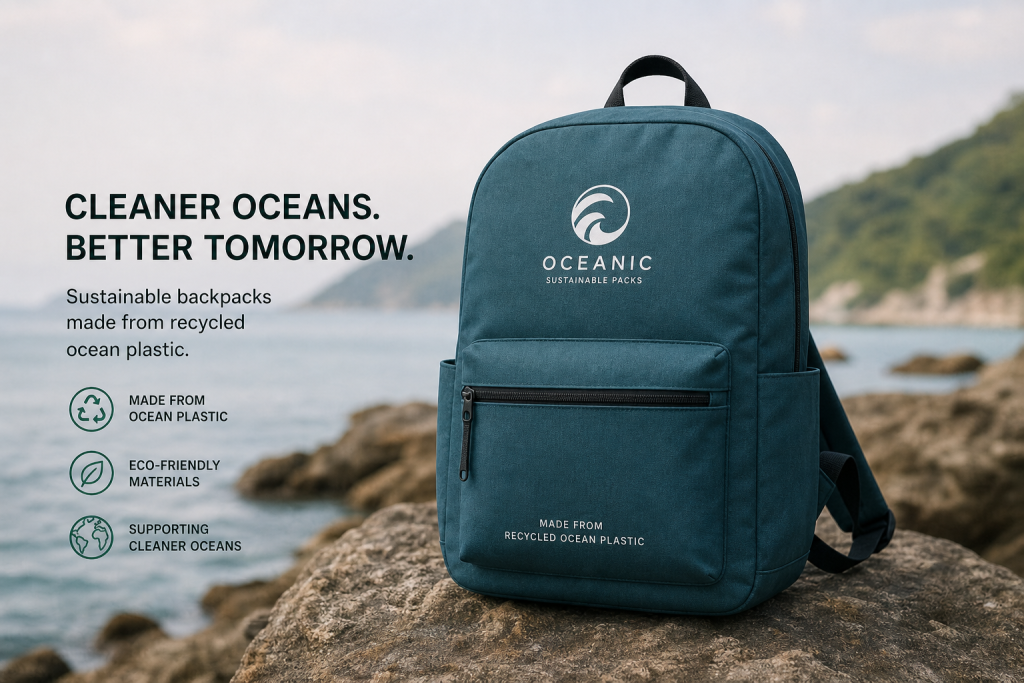
The gear industry is undergoing a meaningful sustainability transformation, and the sustainable backpack category is at the forefront. Major manufacturers are replacing virgin nylon with recycled alternatives derived from ocean plastic, discarded fishing nets, and post-consumer waste. Brands like Patagonia, Cotopaxi, and others have demonstrated that a high-performance, environmentally responsible sustainable backpack is not only possible but commercially viable. When purchasing your next sustainable backpack, consider the brand’s environmental commitments — certifications like bluesign, Fair Trade, and B Corp status indicate meaningful, third-party-verified sustainability practices.
Waterproof treatments based on PFAS chemistry — the so-called “forever chemicals” — are also being phased out in favor of safer, plant-based or fluorocarbon-free DWR alternatives. Choosing a sustainable backpack with PFC-free treatments reduces your environmental footprint without sacrificing meaningful performance in typical weather conditions.
Final Buying Advice: How to Choose the Right Sustainable Backpack
To summarize: the ideal sustainable backpack fits your torso correctly, matches your typical carry volume, is constructed from materials appropriate for your environment, and is organized in a way that matches your daily retrieval patterns. Avoid buying a sustainable backpack based on looks alone — the most photogenic pack on Instagram may be a misery to carry on a six-hour transit day. Prioritize comfort, then organization, then durability, and let aesthetics be the final deciding factor between otherwise equivalent options.
Read genuine long-term user reviews — not just launch-day impressions — before committing to a sustainable backpack purchase. A bag that looks flawless in studio photography may reveal durability issues, zipper failures, or strap degradation after six months of real use. The backpack community at LLmup provides exactly this kind of honest, experience-based guidance to help you invest wisely.
Conclusion
The sustainable backpack you choose becomes a daily companion — present for commutes and conferences, trails and airports, adventures and ordinary Tuesdays. Getting that choice right pays dividends in comfort, productivity, and pure enjoyment for years to come. Armed with the information in this guide, you are well-equipped to find a sustainable backpack that fits your body, suits your lifestyle, and stands the test of time. Happy packing.
Want more expert backpack reviews and buying guides? Visit LLmup’s full post archive for the latest in-depth analyses, comparisons, and first-look impressions across every backpack category.
