Post
Stay Hydrated: CamelBak Mule Hydration Pack – The Gold Standard for All-Day Mountain Biking
May
Stay Hydrated: CamelBak Mule Hydration Pack – The Gold Standard for All-Day Mountain Biking
Introduction: The Original Hydration Pioneer
Before CamelBak, carrying water on a bike meant water bottles or canteens — inconvenient, low-capacity, and difficult to access while riding. CamelBak invented the hands-free hydration reservoir, revolutionizing cycling, hiking, and outdoor sports. The CamelBak Mule is their most popular mountain biking hydration pack, and after decades of refinement, it’s become the gold standard.
The Mule is designed specifically for all-day mountain biking — carrying enough water for long rides, plus space for tools, food, and layers. It’s not a general-purpose backpack; it’s a specialized tool for riders who need hydration and cargo capacity in a stable, comfortable package.
After testing the Mule on multiple mountain bike rides (2-5 hours), trail building sessions, and bike park days, I understand why it’s so popular. The Mule does one thing exceptionally well: keeping you hydrated and organized on the trail.
In this comprehensive review, we’ll explore what makes the CamelBak Mule the standard, where it excels, and who it’s for.
Design Philosophy: Hydration First, Storage Second
The CamelBak Mule follows a “hydration first” design philosophy. The pack is built around the Crux reservoir (CamelBak’s latest water bladder), with cargo space designed around the hydration system.
The pack is designed for:
- Mountain biking: All-day trail rides, enduro racing, backcountry exploration
- Hydration capacity: 3L reservoir (100 oz) — enough water for 3-5 hours of riding in moderate conditions
- Cargo capacity: 9L of additional storage for tools, food, layers, and gear
- Stability: The pack stays put during aggressive descending and technical terrain
The design philosophy prioritizes:
- Hydration access: Easy to fill, easy to clean, easy to drink while riding
- Stability: The pack doesn’t bounce or shift during riding
- Ventilation: Airflow between your back and the pack
- Durability: Materials that survive crashes, branches, and trail abrasion
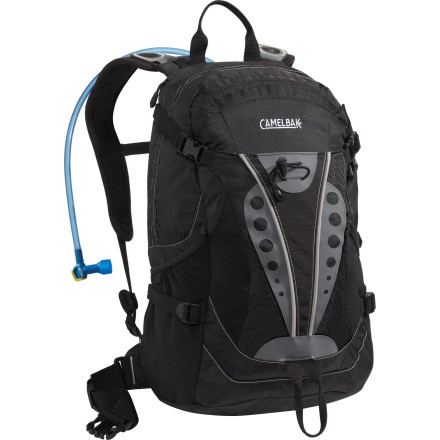
The Mule features CamelBak’s Air Director back panel (raised foam ridges for ventilation), magnetic tube trap (holds the bite valve securely on your chest strap), and crux reservoir (high-flow, easy-fill, easy-clean).
The pack is available in multiple sizes (one size fits most, but there’s also a women’s-specific Mule).
CamelBak backs the Mule with a limited lifetime warranty against defects.
The Crux Reservoir: Hydration Excellence
The CamelBak Mule includes the Crux reservoir — their latest and greatest water bladder. The Crux is a significant improvement over earlier designs.
Key Crux specs:
- Capacity: 3L (100 oz) — standard for all-day rides
- Flow rate: 20% higher than previous CamelBak reservoirs
- Fill: Large screw-top opening (easy to fill, easy to add ice)
- Clean: The screw cap includes a drying hanger and can be turned inside-out (with effort) for cleaning
- Material: BPA-free, BPS-free, and BPF-free polyurethane
In testing, the Crux reservoir was excellent:
- High flow rate: The bite valve delivers a lot of water with little suction — easy to stay hydrated while riding
- Leak-proof: The screw cap seals securely, and the bite valve has an on/off lever
- Easy to fill: The large opening fits under most water sources (kitchen faucet, water fountain, stream with filter)
- Easy to clean: The wide opening allows access for cleaning brushes
The magnetic tube trap is a small but brilliant feature: a magnet on the bite valve snaps onto a magnet on your chest strap, holding the hose securely in place. When you want a drink, just pull the bite valve to your mouth (the magnet releases), drink, and let it snap back. No fumbling, no hose dangling.
The reservoir is housed in its own compartment at the back of the pack (against your back for stability). The compartment has a dedicated hanger for the reservoir, plus a hose port on the shoulder strap.
Storage Architecture: Trail-Optimized Organization
The CamelBak Mule’s storage design is optimized for mountain biking gear — tools, food, layers, and essentials.
Main Cargo Compartment: 9L of Storage
The main cargo compartment is accessible via a U-shaped zipper on the front of the pack. Inside, you’ll find:
- Organizer panel with zippered mesh pockets (for small items: keys, wallet, phone, multi-tool)
- Open space for larger items (jacket, food, pump, spare tube)
- Compression straps to secure the load
The organizer panel is well-designed — not so complex that it’s confusing, but with enough pockets to keep small items from getting lost.
Sample loadout for a full day of mountain biking (4-5 hours):
- 3L water (in reservoir)
- Spare tube (x1-2)
- Tire levers, multi-tool, pump, patch kit
- Energy gels, bars, and snacks
- Light jacket or wind shell
- Phone, keys, wallet
- First aid kit (small)
- ID and insurance card
- Cash or credit card
The 9L cargo capacity (plus 3L water) is perfect for all-day mountain biking. There’s enough room for everything you need, but not so much that you’re tempted to overpack.
External Pockets: Quick Access
The Mule includes several external pockets for items you need quickly:
Front pocket: A small zippered pocket on the front of the pack, great for:
- Energy gels
- Lip balm
- Small camera
- Snacks
Side pockets: Two mesh side pockets (one on each side) for:
- Water bottle (for electrolyte mix or backup)
- Small snacks
- Tire pump (if it fits)
Waist belt pockets: The hip belt includes two small zippered pockets (large enough for a phone or energy gels). These pockets are accessible while riding — no need to stop.
The waist belt pockets are a standout feature. During testing, I kept my phone in one pocket and energy gels in the other. Accessing either while riding was easy and safe (just glance down, unzip, grab).
Helmet Carry: The Mule’s Clever Feature
The Mule includes helmet carry loops on the front of the pack. These loops allow you to stash your helmet when you’re off the bike (at a cafe, a viewpoint, or the trailhead).
To use: unclip the buckles, thread them through your helmet’s vents, and clip back. The helmet sits securely against the front of the pack.
This feature is more useful than I expected — no more carrying your helmet by hand or hanging it off your handlebars.
Comfort and Ergonomics: All-Day Riding Comfort
The CamelBak Mule’s comfort is optimized for mountain biking posture — leaning forward, absorbing bumps, pedaling for hours.
Back Panel: Air Director Ventilation
The Mule features CamelBak’s Air Director back panel — raised foam ridges with airflow channels between them. The design:
- Creates airflow space between your back and the pack
- Reduces pressure points through contoured foam
- Prevents items from poking through (the foam is thick enough)
In testing, the Air Director back panel was significantly more breathable than packs with flat back panels. On warm rides (75-80°F), my back was sweaty but not drenched — a noticeable improvement.
The back panel is also contoured to follow your spine’s natural curve, with extra padding at the lumbar area.
Shoulder Straps: Padded and Ergonomic
The shoulder straps are thickly padded with foam and covered in mesh. They’re contoured to follow your shoulders’ natural curve and designed to stay in place during aggressive descending.
The straps include a sternum strap with the magnetic tube trap. The sternum strap is adjustable in height and tension.
The left shoulder strap (or right, depending on configuration) includes the tube trap magnet — the bite valve snaps onto the magnet when not in use. This is brilliant — no more hose dangling or flapping while riding.
Hip Belt: Padded and Pocketed
The Mule includes a padded hip belt as standard — a rarity for a hydration pack and a sign of CamelBak’s commitment to all-day comfort. The belt:
- Is padded with foam (not thick, but sufficient for a 3L water bladder)
- Includes zippered pockets on both sides (for phone, keys, energy gels)
- Is adjustable and removable
The padded hip belt helps stabilize the pack during riding and takes some weight off your shoulders. For all-day rides (4+ hours), the hip belt makes a significant difference in comfort.
The zippered pockets are large enough for a modern smartphone (iPhone Pro Max fits). Accessing the pockets while riding is easy — just glance down, unzip, grab.
Load Testing: Mountain Biking Comfort
I tested the Mule on multiple mountain bike rides (2-5 hours) with varying loads:
- Full hydration (3L water + light cargo, ~10 lbs total): Very comfortable. The pack stayed in place, no bouncing. The hip belt stabilized the load well.
- Full hydration + heavy cargo (3L water + tools, food, layers, ~15 lbs total): Comfortable for all-day riding. The padded hip belt carried the weight effectively. The shoulder straps were comfortable for hours.
- Max capacity (3L water + stuffed cargo, ~18 lbs total): Acceptable for shorter rides (2-3 hours). For longer days, this load is heavy for the Mule’s suspension.
For typical all-day mountain biking (3L water + tools + food + layers, ~12-14 lbs total), the Mule is exceptionally comfortable.
Real-World Performance: Trail Testing
I tested the CamelBak Mule on multiple mountain bike rides, trail building sessions, and all-day epics. Here’s how it performed.
