Post
The Submersible Fortress: YETI Panga 28 – Fully Waterproof Backpack for Deep-Sea Adventure
May
The Submersible Fortress: YETI Panga 28 – Fully Waterproof Backpack for Deep-Sea Adventure
Introduction: The Backpack That Laughs at Water
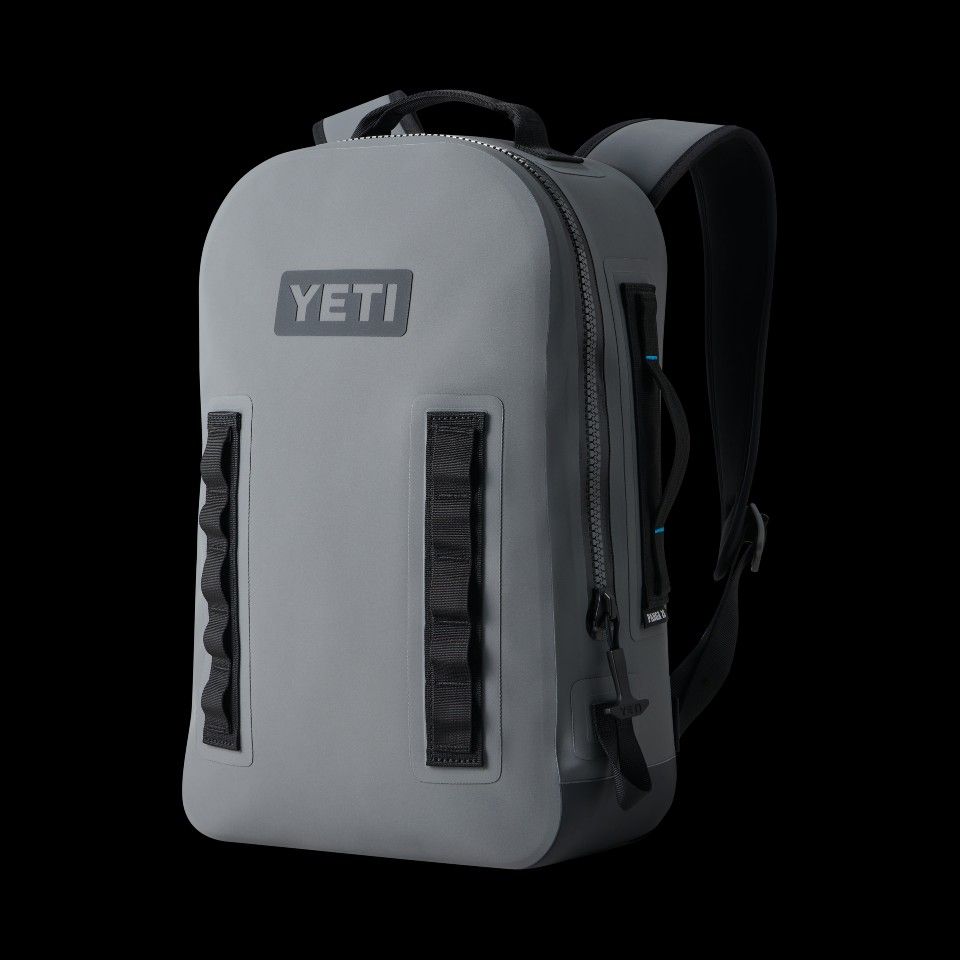
The Submersible Fortress: YETI Panga 28 – Fully Waterproof Backpack for Deep-Sea Adventure. Most “waterproof” backpacks can handle a light rain shower. Some can survive a few seconds underwater if you’re lucky. The YETI Panga 28 Waterproof Backpack is different. This is a backpack that you could throw into a river, drag through a swamp, or submerge in the ocean — and your gear would stay bone dry.
YETI built their reputation on coolers that could survive bear attacks and keep ice frozen for days. The Panga series applies that same over-engineered philosophy to backpacks. The Panga 28 is fully submersible (IP67 rated), meaning it can be submerged in up to 3 feet of water for 30 minutes without any water entering the main compartment.
After testing the Panga 28 on kayaking trips, beach days, and intentionally submerging it in a lake (for science), I can confirm that this backpack is ridiculously waterproof. But that waterproofing comes with trade-offs weight, comfort, and price.
In this comprehensive review, we’ll explore what makes the YETI Panga 28 special, where it excels, and who it’s for.
Design Philosophy: Over-Engineered for the Worst Conditions
The YETI Panga 28 follows a “no excuses” design philosophy. YETI doesn’t build gear for fair-weather users or casual conditions. They build gear for people who fish in the Gulf of Mexico, kayak in the Pacific Northwest, and explore places where failure isn’t an option.
The pack is designed for:
- Kayaking and canoeing: Waterproof gear for multi-day paddle trips
- Fishing: Saltwater and freshwater, wading or boat
- Beach and boating: Sand, salt spray, and waves
- Any water-based adventure: Rafting, sailing, paddleboarding
- Winter sports: Snow, slush, and melt-proof
The design philosophy prioritizes:
- Waterproofing: IP67 rated — fully submersible, not just water-resistant
- Durability: Materials that survive saltwater, UV, and abrasion
- Simplicity: No zippers, no mesh, no fabric that can degrade in water
- Protection: Rigid frame, padded interior, dry bag roll-top closure
The Panga 28 features a dry bag roll-top closure with an oversized buckle, a high-density foam frame that gives the pack shape, a nylon harness with hydrophobic mesh, and submersible zippers on the external pocket.
YETI backs the Panga 28 with a 3-year warranty (YETI’s standard) — shorter than some competitors but backed by a company known for quality.
The pack is available in several colors, including Rescue Red (high-visibility), Field Tan, and Alpine White. The Rescue Red version is ideal for water safety — you’re easier to spot if you go overboard.
Material Science: IP67 Submersible Construction
The YETI Panga 28 uses materials chosen for extreme waterproofing and durability, not weight savings.
Key material specifications:
- Exterior: High-density nylon with TPU laminate (fully waterproof)
- Interior: White TPU liner (high-contrast so you can see gear inside)
- Frame: High-density foam (gives the pack shape and structure)
- Closure: Dry bag roll-top with oversized buckle
- Zippers: YKK AquaSeal submersible zipper (on external pocket)
- Hardware: YETI-engineered aluminum and polymer components
The TPU-laminated nylon exterior is the key to the Panga’s waterproofing. TPU (thermoplastic polyurethane) is the same material used in whitewater rafts and dry suits — it’s 100% waterproof, flexible, and durable. The material is welded (not sewn) at the seams, eliminating needle holes that could leak.
In testing, the Panga 28 was genuinely submersible. I filled it with paper towels (a sensitive test), sealed the roll-top with 5 rolls, and submerged it in a lake for 30 minutes. When I opened the pack, the paper towels were bone dry. The IP67 rating is not marketing hype — this pack can handle being in the water.
The white TPU interior liner is a thoughtful detail — the light color makes it easy to see gear inside a dark dry bag. Traditional dry bags have black interiors that swallow light; the Panga’s white interior reflects light, making it easier to find items.
The high-density foam frame gives the Panga its distinctive boxy shape. Unlike floppy dry bags that collapse on themselves, the Panga stands upright and holds its shape, making packing and unpacking much easier.
The YKK AquaSeal submersible zipper on the external pocket is a beast. This is the same type of zipper used on dry suits and submersible dive gear. It’s chunky, stiff, and 100% waterproof. The trade-off: it’s harder to open and close than a standard zipper, especially with cold or wet hands.
The Submersible Fortress: YETI Panga 28 – Fully Waterproof Backpack for Deep-Sea Adventure
Storage Architecture: Waterproof and Protective
The YETI Panga 28’s storage design is optimized for waterproof protection and gear organization.
Main Compartment: The Dry Storage Vault
The main compartment is accessed via the dry bag roll-top closure. Inside, you’ll find:
- Padded laptop sleeve (fits up to 15-inch laptops, suspended false bottom)
- Open space for everything else
- White TPU liner (high visibility)
The laptop sleeve is a welcome feature — many waterproof dry bags lack any internal organization, leaving your laptop to bounce against the walls. The Panga’s sleeve is padded on all sides and suspended from the bottom, providing drop protection.
Sample loadout for a kayaking trip (full day):
- 15-inch laptop (for the evening, in dry storage)
- Change of clothes (dry clothes for after paddling)
- Warm layers (if conditions are cold)
- Food and snacks
- Water bottle (inside the main compartment)
- Phone, keys, wallet
- First aid kit
- Headlamp
- Camera or GoPro
The 28L capacity is the sweet spot for day trips — large enough for a full day’s gear but compact enough to fit in a kayak’s bow or stern.
Roll-Top Closure: The Bulletproof Seal
The Panga 28 uses a heavy-duty dry bag roll-top closure with an oversized buckle. To close:
- Fold the top down 3-5 times (more folds = more waterproofness)
- Clip the buckle across the rolled top
- Tighten the webbing (optional, for compression)
The closure is simple, bombproof, and effective. The oversized buckle is easy to grab with cold or wet hands (no fumbling).
The trade-off: the roll-top closure is slower to open and close than a zipper. For frequent access (hiking where you need your camera often), this is frustrating. For water-based activities where access is less frequent, it’s fine.
YETI recommends rolling the top at least 3 times for full IP67 submersion protection. For rain and spray, 1-2 rolls are sufficient.
External Pocket: The Velcro Revolution
The Panga 28 features an external pocket with a YKK AquaSeal submersible zipper. The pocket is:
- Waterproof (can be submerged — yes, the zipper is submersible)
- Padded (light padding for protection)
- Lined with Velcro — yes, Velcro
The Velcro interior is designed for YETI’s accessory system. You can attach YETI’s Velcro-backed accessories (sold separately) inside the pocket:
- Small zippered pouches
- Elastic tool holders
- Mesh pockets
- Cable organizers
If you don’t buy YETI’s accessories, the Velcro is just… there. It doesn’t interfere with normal use, but it’s an odd choice for users who won’t buy the add-ons.
The external pocket is large enough for a phone, wallet, keys, and some small accessories.
Water Bottle Pockets: None (And That’s OK)
The Panga 28 has no external water bottle pockets. This is intentional — in a submersible pack, any external pocket with a stitched-on or bound-on construction is a potential leak point. The clean exterior is waterproof; pockets would compromise that.
Your options for water bottles:
- Carry them inside the main compartment
- Use a separate water bottle holder or hydration reservoir (the pack can accommodate a hydration bladder)
- Carry water bottles on your boat or bike — not in the pack
For water-based activities, carrying water bottles inside the main compartment is fine. You’re not stopping every five minutes for a drink.
Comfort and Ergonomics: Sacrificing for Waterproofing
The YETI Panga 28’s comfort is acceptable but not exceptional. The pack prioritizes waterproofing and durability over padding and ventilation.
Back Panel: Minimal Padding, No Ventilation
The back panel features minimal padding — just a thin foam layer covered in the same TPU-laminated fabric as the rest of the pack. There are no airflow channels.
In testing, the back panel was comfortable for short carries (15-30 minutes) but less comfortable for longer periods. The lack of ventilation means your back will get sweaty in warm weather.
The pack’s rigid foam frame helps with load transfer but doesn’t improve breathability.
For its intended use — carrying from the car to the boat, short portages, and around camp — the comfort is adequate. For long-distance hiking or all-day wear, it’s not ideal.
The Submersible Fortress: YETI Panga 28 – Fully Waterproof Backpack for Deep-Sea Adventure
Shoulder Straps: Padded but Wide
The shoulder straps are padded with foam and covered in hydrophobic mesh (mesh that doesn’t absorb water). The straps are:
- Wide — the straps are broad, distributing weight across a large area
- Thick — padding is generous for a submersible pack
- Hydrophobic — the mesh doesn’t saturate with water
The straps include a sternum strap with an elastic section (for natural chest expansion while breathing). The sternum strap is adjustable in height.
Notably, the straps lack load lifters — the small straps at the top for weight distribution. For moderate loads (15-20 lbs), load lifters aren’t essential.
The Submersible Fortress: YETI Panga 28 – Fully Waterproof Backpack for Deep-Sea Adventure
Hip Belt: Minimal Webbing
The Panga 28 includes a minimal webbing hip belt (thin strap, no padding). This is not a load-bearing hip belt; it’s designed to:
- Stabilize the pack during active movement
- Keep the pack from bouncing
The hip belt is removable — unclip the buckles and it comes off. For boating and kayaking, you may want to remove it to avoid snags.
The belt lacks pockets — YETI sells accessory hip belt pockets separately.
The Submersible Fortress: YETI Panga 28 – Fully Waterproof Backpack for Deep-Sea Adventure
Load Testing: Water-Ready Comfort
I tested the Panga 28 with varying loads during water-based activities:
- Light load (5-10 lbs): Comfortable for short carries. The pack’s weight (3.2 lbs empty) is noticeable at lighter loads.
- Medium load (12-15 lbs): Acceptable for carrying from car to boat (10-15 minutes). For longer carries, the lack of ventilation and minimal padding becomes noticeable.
- Heavy load (18-20 lbs): Uncomfortable for extended carries. This pack is not designed for heavy load lugging.
The Panga 28 is best used for short carries — from your vehicle to your boat, around camp, or short portages. It’s not a backpacking pack.
Real-World Performance: Water-Based Testing
I tested the YETI Panga 28 on kayaking trips, beach days, and intentional submersion tests. Here’s how it performed.
Kayaking Trip (4 hours, coastal waters)
Load: Laptop (protected inside), change of clothes, lunch, water bottle, phone, camera. The Panga 28 was exceptional in the kayak. The rigid foam frame meant the pack held its shape, easy to pack in the kayak’s bow. Salt spray and occasional waves didn’t penetrate the pack — everything inside stayed dry.
The roll-top closure was easy to open and close on the water (after beaching the kayak, not while paddling).
Lake Submersion Test (intentional, 30 minutes)
Load: Paper towels (sensitive test), phone (turned off, as a test), clothes. I sealed the Panga with 5 rolls of the top, placed it in 2 feet of water, left it for 30 minutes. Result: Bone dry. The paper towels were dry. The phone (which I turned off beforehand as a test) was dry. The IP67 rating is genuine.
The pack’s rigid frame kept it from collapsing, and the TPU fabric repelled water completely.
Beach Day (6 hours, sand and spray)
Load: Towels, dry clothes, sunscreen, snacks, phone. The Panga 28 kept sand out as effectively as water — the roll-top closure creates a tight seal that sand can’t penetrate. The TPU exterior wiped clean easily; no sand stuck to the fabric.
The pack’s white interior made finding items easy, even in low light (overcast day).
Who Is the YETI Panga 28 For?
The YETI Panga 28 is perfect for:
- Kayakers and canoeists who need waterproof gear for multi-day trips
- Fishing guides and anglers who wade in saltwater or fish in wet conditions
- Boating enthusiasts who want dry, protected storage on the water
- Rafters and stand-up paddleboarders who expect to get wet
- Beach-goers who want sand-proof, water-proof storage
- Winter sports enthusiasts who need melt-proof, slush-proof gear
- Anyone who truly needs a submersible backpack — not just water-resistance
It’s less ideal for:
- Hikers and backpackers (the pack is heavy and lacks ventilation)
- Daily commuters (the roll-top is slow, and the pack is overkill)
- Travelers needing laptop access (access to the laptop sleeve requires opening the roll-top)
- Budget buyers (the Panga 28 costs $250-300)
- Those who need quick access to gear (the roll-top is slower than a zipper)
Pros and Cons Summary
Pros:
- IP67 submersible rating (3 feet for 30 minutes) — genuinely waterproof
- TPU-laminated fabric with welded seams (no needle holes)
- Rigid foam frame keeps the pack upright and packable
- White interior liner (high visibility for finding gear)
- Padded laptop sleeve (suspended, false bottom)
- External pocket with submersible zipper (YKK AquaSeal)
- Velcro interior for YETI accessory system
- Hydrophobic mesh on shoulder straps (doesn’t absorb water)
- YETI’s reputation for durability
Cons:
- Very expensive ($250-300)
- Heavy (3.2 lbs for a 28L pack)
- Minimal padding on back panel (uncomfortable for long carries)
- No ventilation (sweaty back in warm weather)
- Roll-top closure is slow to open and close
- External pocket’s AquaSeal zipper is stiff and hard to operate
- Velcro interior requires YETI accessories (or your own Velcro-backed pouches) to be useful
Comparison to Other Waterproof Backpacks: The Submersible Fortress: YETI Panga 28 – Fully Waterproof Backpack for Deep-Sea Adventure
How does the YETI Panga 28 compare to competitors?
- Vs. Sea to Summit Hydraulic Dry Pack: Sea to Summit is lighter and more packable; YETI wins on structure (rigid frame), laptop protection, and durability. Sea to Summit is best as a dry bag; YETI is best as a waterproof backpack.
- Vs. Ortlieb Atrack 25L: Ortlieb has a better harness system (more comfortable) and a roll-top design; YETI wins on submersible rating (Ortlieb is water-resistant, not submersible) and durability. Ortlieb for paddlesports; YETI for submersible needs.
- Vs. Earth Pak Waterproof Backpack: Earth Pak is significantly cheaper ($60-80) and also claims submersible performance; YETI wins on build quality, interior visibility, laptop protection, and brand reputation. Earth Pak for budget; YETI for premium.
Final Verdict: The Ultimate Submersible Pack
The YETI Panga 28 Waterproof Backpack is not for everyone. It’s expensive ($250-300), heavy (3.2 lbs), and uncomfortable for long carries. For daily commutes, hiking, or general travel, it’s overkill.
But for its intended use — water-based adventures where your gear must stay dry, no exceptions — the Panga 28 is exceptional. The IP67 submersible rating is genuine. The TPU-laminated fabric and welded seams are bombproof. The rigid foam frame and white interior make the pack practical, unlike floppy dry bags.
The YETI Panga 28 is a specialty tool for a specific job. If your gear absolutely, positively cannot get wet — and you’re willing to pay for that assurance — the Panga 28 is worth every penny. If you just need a pack that can handle rain or splashes, buy a cheaper, lighter, more comfortable pack.
Rating: 4.5/5 – Exceptional for water-based adventures. Genuinely submersible. Expensive and specialized.
The Submersible Fortress: YETI Panga 28 – Fully Waterproof Backpack for Deep-Sea Adventure
