Post
Unyielding Strength: Hyperlite 2400 Southwest – Waterproof Dyneema for Ultralight Hikers Best Choice
May
Introduction: The Ultralight Hiker’s Holy Grail
In the world of ultralight backpacking, few materials inspire as much reverence as Dyneema Composite Fabric (DCF). Originally developed for sailing (as a replacement for steel in racing boat rigging), DCF is stronger than steel at the same weight, waterproof, and incredibly lightweight. The Hyperlite 2400 Southwest is one of the most iconic backpacks made from this miracle material.
Hyperlite Mountain Gear (HMG) is a small, Maine-based company that has become a cult favorite among thru-hikers, ultralight backpackers, and alpinists. Their 2400 Southwest is their most popular model—a 40-liter pack that weighs just 2 lbs but can carry loads up to 40 lbs.
After testing the 2400 Southwest on a multi-day backpacking trip and multiple day hikes, I’ve developed a deep appreciation for what HMG has accomplished. This is not a pack for everyone—its simple design, high price, and specialized materials make it a tool for serious ultralight enthusiasts. But for its target users, it’s exceptional.
In this comprehensive review, we’ll explore what makes the Hyperlite 2400 Southwest special, where it excels, and whether it’s worth the investment.
Design Philosophy: Simplicity, Durability, Weight
The Hyperlite 2400 Southwest follows a radically minimalist design philosophy: simplify everything, remove anything non-essential, and use the strongest, lightest materials available.
The pack is designed for:
- Thru-hiking: Long-distance trails like the PCT, CDT, and AT
- Ultralight backpacking: Sub-10 lb base weights
- Alpine climbing and mountaineering: Technical gear carry
- Fastpacking: High-mileage days with minimal weight
The design philosophy prioritizes:
- Ultralight weight: The 2400 Southwest weighs just 2 lbs (32 oz)
- Weatherproofing: The Dyneema fabric is waterproof (no rain cover needed)
- Simplicity: No unnecessary pockets, zippers, or features
- Durability: Dyneema is incredibly strong for its weight
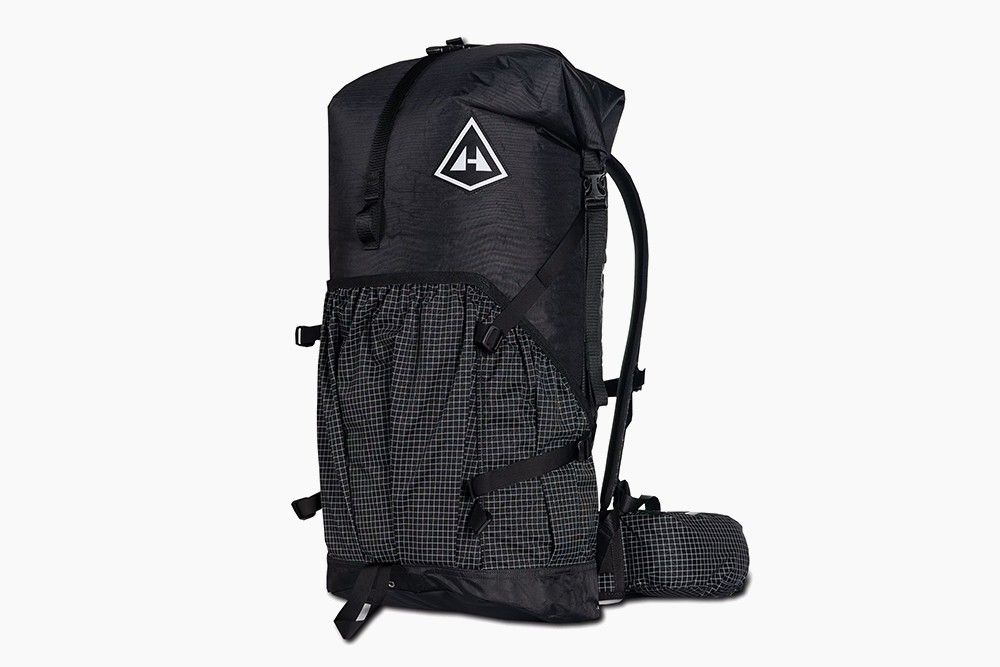
The 2400 Southwest is named for its capacity (2400 cubic inches, approximately 40 liters) and its orientation (Southwest configuration — roll-top with front pocket). The pack is available in two sizes: regular and tall (for different torso lengths).
The pack features an external front pocket made of Dyneema mesh, water bottle pockets on both sides, and a roll-top closure for weatherproofing.
Hyperlite backs the 2400 Southwest with a limited lifetime warranty against defects. Given the durability of Dyneema, you’re unlikely to need it.
Material Science: Dyneema Composite Fabric
The Hyperlite 2400 Southwest is made from Dyneema Composite Fabric (DCF), formerly known as Cuben Fiber. This material is the secret to the pack’s exceptional strength-to-weight ratio.
Key material specifications:
- Exterior: DCF (Dyneema Composite Fabric) — 5.0 oz/yd² main body
- Front pocket: Dyneema mesh (50% lighter than traditional mesh)
- Bottom panel: DCF 5.0 oz/yd² + additional reinforcement
- Zippers: YKK (minimal use — only the front pocket)
- Hardware: Lightweight plastic and aluminum components
What is Dyneema? Dyneema is a ultra-high-molecular-weight polyethylene (UHMWPE) fiber. It’s:
- Stronger than steel: Pound for pound, Dyneema is 15 times stronger than steel
- Incredibly lightweight: It floats on water because it’s less dense than water
- Waterproof: DCF is waterproof — no DWR coating needed
- UV-resistant: Won’t degrade in sunlight
In testing, the 2400 Southwest survived multiple days of backpacking — placed on wet ground, scraped against rocks, stuffed into bear lockers — with no visible wear. The Dyneema fabric doesn’t abrade easily, though it can develop small pinholes if subjected to sharp objects (a concern with any fabric).
The material has a crinkly, paper-like feel that takes getting used to. It’s not soft like nylon; it’s stiff and structured. Some users love the unique texture; others find it odd.
The waterproof construction is a major advantage. The DCF fabric is inherently waterproof, and the seams are taped. In testing, the 2400 Southwest survived 30 minutes of heavy rain with the interior bone dry. No rain cover needed — the pack itself is the protection.
The trade-off: DCF is expensive (Hyperlite’s packs cost $300-400) and doesn’t stretch (unlike nylon, which can accommodate overstuffing).
Storage Architecture: Ultralight Minimalism
The Hyperlite 2400 Southwest’s storage design is radically minimalist — there are almost no pockets or compartments. This is intentional: every pocket adds weight and complexity.
Main Compartment: The Only Real Compartment
The main compartment is a single large tube with a roll-top closure. Inside, you’ll find no internal organization — no hydration sleeve, no zippered pockets, no dividers. Just open space.
This minimalist approach forces you to use your own organization system: packing cubes, stuff sacks, and pouches. For ultralight hikers who already use these systems, it’s liberating. For users who prefer built-in organization, it’s frustrating.
Sample loadout for a 3-5 day backpacking trip (ultralight base weight under 10 lbs):
- Sleeping bag (down, in a stuff sack)
- Tent or tarp (in a stuff sack)
- Sleeping pad (inflatable, folded or rolled)
- Stove and fuel (in a pot or bag)
- Food (in a bear bag or dry bag)
- Water filter and bottles
- Clothing (in a stuff sack)
- First aid kit and headlamp
- Navigation tools (map, compass, GPS)
The 40L capacity (2400 cubic inches) is the sweet spot for ultralight thru-hiking. It’s large enough for multi-day trips with a sub-10 lb base weight, but compact enough for high-mileage days.
Roll-Top Closure: Waterproof and Expandable
The 2400 Southwest uses a roll-top closure instead of a traditional zipper. The roll-top:
- Is waterproof: Roll it down at least three times, secure the buckle, and water can’t enter
- Allows expansion: Roll it fewer times to increase volume (up to 45-50L max)
- Is simple: Fewer moving parts than a zipper
- Is secure: The buckle keeps the roll closed
The roll-top closure takes a few seconds to open and close — slower than a zipper — but the weatherproofing benefits are worth it for backpacking.
Front Pocket: The Only External Pocket
The 2400 Southwest features a large front pocket made of Dyneema mesh. This pocket is designed for:
- Drying wet gear (the mesh allows airflow)
- Storing items you need quickly (map, snacks, headlamp)
- Carrying a tent or tarp (can be stuffed in the pocket)
The pocket is not zippered — it’s an open-top stuff pocket. This saves weight but means items could potentially fall out if the pack is upside down. In practice, the mesh is stretchy enough to hold items securely under tension.
Water Bottle Pockets: Deep but Simple
The 2400 Southwest features two side water bottle pockets made of Dyneema fabric. The pockets are:
- Deep (fits 1L SmartWater bottles perfectly — the ultralight hiker’s standard)
- Unstretchy (Dyneema doesn’t stretch, so the pocket size is fixed)
- Accessible while wearing the pack (with practice — you may need to be flexible)
The pockets are designed to fit tall, skinny bottles (like 1L SmartWater bottles). Wide bottles (Nalgene) will fit but are tight. The pockets lack elastic or cinch cords, so bottles are held by friction alone.
Shoulder Straps: Minimal but Functional
The shoulder straps themselves include no pockets — Hyperlite sells accessory shoulder strap pockets separately. For the base price, you get bare webbing. This cost-cutting (or weight-saving) decision frustrates some users.
The Suspension System: Simple but Effective
The Hyperlite 2400 Southwest features a minimalist suspension system designed for ultralight loads (under 30 lbs).
Back Panel: Unpadded Dyneema
The back panel is unpadded Dyneema fabric — no foam, no mesh, no structure. This saves significant weight but means:
- You’ll feel items inside against your back (pack strategically — soft items against your back)
- There’s no ventilation (expect a sweaty back)
- The pack relies on its internal structure (your clothing and gear) for shape
For ultralight hikers who carry a sleeping bag or clothing against their back, the lack of padding is acceptable. For users who carry hard items (cook pot, bear canister) against their back, it can be uncomfortable.
The back panel includes a removable foam sit pad (yes, included). The sit pad provides minimal padding and can be removed to save weight or used as a camp seat.
Shoulder Straps: Padded but Minimal
The shoulder straps are padded with foam and covered in mesh. The padding is comfortable for loads up to 30 lbs but thinner than traditional packs.
The straps lack load lifters — the small straps at the top for weight distribution. On an ultralight pack, load lifters are often omitted to save weight.
A sternum strap is included and adjustable. The sternum strap helps stabilize the pack during dynamic movement.
The shoulder straps are sewn directly to the pack — not adjustable for torso length. You must buy the correct size (regular or tall) for your torso.
Hip Belt: Removable and Padded
The 2400 Southwest includes a removable padded hip belt. The belt is:
- Padded with foam (thicker than many ultralight belts)
- Adjustable (using ladder locks)
- Removable (yes, you can take it off to save weight for day hikes or light loads)
- Lacking pockets (Hyperlite sells accessory hip belt pockets separately)
The hip belt transfers weight effectively for loads up to 30 lbs. For typical ultralight loads (20-25 lbs), it’s very comfortable. The removable design is thoughtful — use it when carrying heavy loads, remove it when going light.
