Post
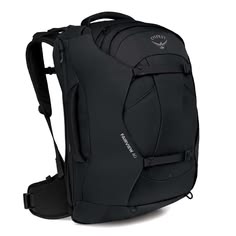
Fly Light: Osprey Farpoint 40 Travel Backpack – The Best Carry-on for Global Nomads
May
Fly Light: Osprey Farpoint 40 Travel Backpack – The Best Carry-on for Global Nomads
Introduction: The Gold Standard for One-Bag Travel
If you spend any time in travel enthusiast communities—r/onebag, digital nomad forums, travel blogs—you’ll see the same recommendation again and again. The Osprey Farpoint 40 has become the default choice for travelers who want to carry everything on their backs and avoid checked luggage.
For good reason. The Farpoint 40 has been refined over years of real-world use, incorporating feedback from thousands of travelers. It hits a sweet spot: large enough for indefinite travel (if you pack strategically) but small enough to fit in overhead bins on almost every airline worldwide.
After testing the Farpoint 40 on a two-week trip through Europe—flights, trains, cobblestone streets, and all—I understand the hype. This backpack is exceptionally well-designed for its intended purpose. But it’s not perfect, and it’s not for everyone.
In this comprehensive review, we’ll explore what makes the Osprey Farpoint 40 the gold standard, where it falls short, and who should buy it (and who should look elsewhere).
Design Philosophy: Purpose-Built for Travel
The Osprey Farpoint 40 is not an everyday backpack. It’s a travel backpack—designed specifically for moving between cities, living out of a bag, and surviving airport security and overhead bins.
This focus on travel shapes every design decision. The bag opens like a suitcase (clamshell) for easy packing. The suspension system is robust enough for long walks with heavy loads. The dimensions are optimized for carry-on compliance. The materials are chosen for durability under travel stress.
The Farpoint 40 is available in multiple sizes (XS/S, S/M, M/L) to fit different torso lengths—a rarity in travel backpacks and a sign of Osprey’s commitment to comfort.
Unlike many travel backpacks that try to look sleek and urban, the Farpoint 40 embraces its outdoor heritage. It looks like what it is: a technical backpack designed for movement. This aesthetic may not suit everyone, but it telegraphs functionality.
The bag features Osprey’s signature LightWire suspension system—a lightweight internal frame that transfers weight from your shoulders to your hips. We’ll dive into comfort later, but this system is the key to the Farpoint’s carrying ability.
Material Science: Built for the Rigors of Travel
The Osprey Farpoint 40 uses a bluesign-approved nylon with a durable water-repellent (DWR) coating. Osprey is a leader in sustainable manufacturing, and the Farpoint benefits from this commitment.
Key material specifications:
- Exterior: 200D nylon packcloth (main), 420D nylon (high-wear areas)
- Lining: 200D nylon
- Frame: LightWire steel alloy internal frame
- Hardware: YKK zippers and Duraflex buckles
The 200D nylon is lighter than the ballistic nylon used on commuter backpacks, but Osprey reinforces high-wear areas (bottom, corners, strap attachment points) with 420D nylon. This hybrid approach saves weight where possible while maintaining durability where needed.
The DWR coating provides adequate weather resistance for travel. In testing, the Farpoint survived 30 minutes of moderate rain with no interior moisture. For heavy downpours, Osprey sells an optional rain cover (sold separately). Given the bag’s travel focus including the rain cover would be appreciated.
The YKK zippers are robust and lockable (the main compartment zippers can be secured with a small lock). This is a security feature for hostels, trains, and other situations where you might leave your bag unattended.
The LightWire frame is the most important material feature. It’s a steel alloy wire bent into a hoop shape that provides structure and weight transfer. Despite being metal, it’s lightweight (the bag weighs only 3.5 lbs empty) and flexible enough to fit into overhead bins.
Storage Architecture: Suitcase Meets Backpack
The Osprey Farpoint 40’s storage design is where its travel focus shines. It’s more like a suitcase that you can wear than a traditional backpack.
Clamshell Opening: The Suitcase Experience
The main compartment opens fully like a suitcase (U-shaped zipper). You can lay the bag flat, open it completely, and see everything inside. This makes packing and unpacking dramatically easier than top-loading or even wide-mouth designs.
Inside the main compartment, you’ll find:
- Compression straps to secure your load and reduce bulk
- Divided sections with mesh zippered panels
- Two zippered mesh pockets on the inside of the lid for small items
- Otherwise open space
The divided sections are brilliant. One side is for clothes, the other for gear. The mesh panels keep everything visible and organized. You can pack like you’re using a suitcase but carry like you’re using a backpack.
Sample loadout from testing (2-week trip):
- 5 shirts
- 3 pairs of pants/shorts
- 7 pairs of socks and underwear
- 1 lightweight jacket
- 1 pair of shoes (in addition to worn pair)
- Dopp kit
- Tech pouch (charger, cables, power bank)
- 15-inch laptop
- Tablet
- Book
- Water bottle
- Travel documents
The 40L capacity held everything comfortably with room to spare. For reference, 40L is the maximum carry-on size for most airlines (dimensions: 22″ x 14″ x 9″).
Laptop Compartment: Separated and Suspended
The laptop compartment is located on the front of the bag (not against your back). This is an unusual design choice that has pros and cons.
The compartment is fully independent and includes a padded laptop sleeve suspended with a false bottom. It fits laptops up to 15 inches comfortably (and some 16-inch models, depending on dimensions). A separate tablet sleeve sits next to the laptop sleeve.
The pros of front laptop placement:
– You can access your laptop without opening the main compartment
– The laptop isn’t pressed against your back (more comfortable with rigid devices)
– Security (the compartment faces forward, harder for pickpockets to access unnoticed)
The cons of front laptop placement:
– The laptop is farther from your back, which can affect weight distribution
– The compartment takes space from the main compartment
– Some users find it less intuitive than rear laptop sleeves
During testing, I adapted quickly to the front placement. The weight distribution impact was noticeable but not problematic. The easy access was genuinely convenient during airport security.
External Pockets: Minimal but Functional
The Farpoint 40 has minimal external pockets—a design choice that keeps the bag’s dimensions carry-on compliant and prevents bulging.
Front pocket: A zippered pocket on the front of the bag. Inside, you’ll find organization: pen slots, a key clip, and a small zippered mesh pocket. This pocket is perfect for items you need during travel: passport, phone, wallet, boarding pass, snacks.
Top pocket: A small zippered pocket on the top of the bag, sized for sunglasses, earbuds, or other small essentials.
Side mesh pockets: Two stretchy mesh pockets on the sides. One is designed for water bottles and fits bottles up to 32 oz securely. The other is designed for a tripod or umbrella but works for smaller bottles as well.
The external pockets are functional but sparse. This is a deliberate trade-off: more pockets would add bulk and potentially push the bag over carry-on dimensions when full.
