Post
Pure Comfort: Muji Less Strain Backpack – Patented Japanese Design for Effortless Carry
May
Pure Comfort: Muji Less Strain Backpack – Patented Japanese Design for Effortless Carry
Introduction: The Backpack That Feels Like Nothing at All
Walk into any Muji store, and you’ll encounter a philosophy of radical simplicity. No logos. No unnecessary decoration. Just thoughtful design focused on solving real problems. The Muji Less Strain Backpack embodies this philosophy perfectly—it’s a backpack designed to solve one problem better than almost anyone else: comfort.
Most backpack manufacturers add padding, thicker straps, and more foam, hoping to mask the fundamental issue—backpacks put strain on your body. Muji took a different approach. Their patented Less Strain design rethinks how a backpack interacts with your body, distributing weight across your entire back rather than concentrating it on your shoulders.
After three weeks of testing the Muji Less Strain Backpack in daily use—commuting, travel, and everything between—I can confidently say this is one of the most comfortable backpacks I’ve ever worn. But comfort isn’t everything. In this comprehensive review, we’ll explore whether Muji’s minimalist philosophy delivers on all fronts.
Design Philosophy: Subtraction by Addition
Muji’s approach to design is often described as “subtraction”—removing everything non-essential until only what matters remains. The Less Strain Backpack is a masterclass in this philosophy.
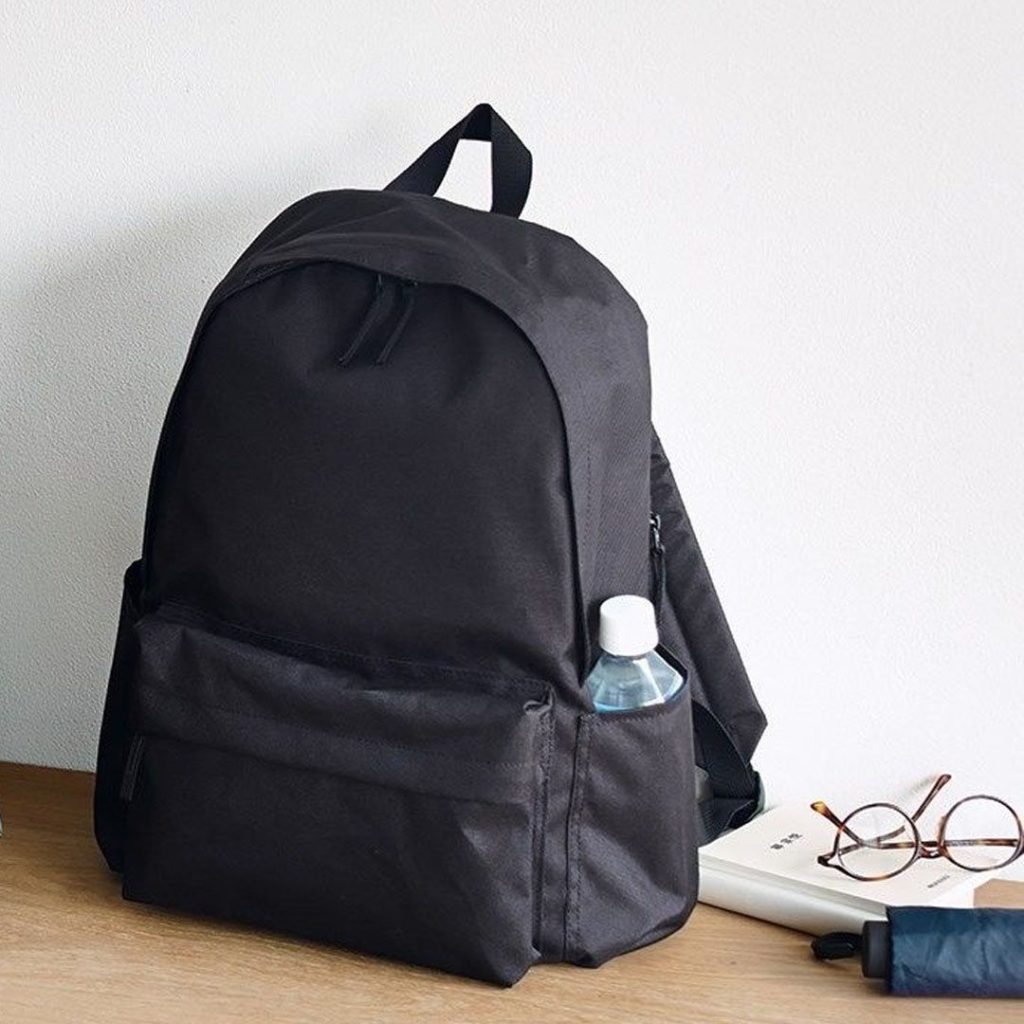
The bag has no external logos (the only branding is a small tag inside). The silhouette is clean and understated—a simple rectangular shape available in muted, natural colors (black, navy, beige, olive). In a world of screaming branding and flashy designs, the Muji backpack is refreshingly quiet.
But this minimalism isn’t aesthetic purism; it’s functional. Every design element serves a purpose. The lack of external pockets means smoother lines and fewer points of failure. The simple shape optimizes internal space. The muted colors hide dirt and wear.
The patented Less Strain technology is the centerpiece. Instead of traditional shoulder straps that concentrate weight on two narrow points, the Muji system uses a combination of wide, contoured straps and a specialized back panel that distributes weight across your entire back. The result feels almost magical—even heavy loads feel significantly lighter than they are.
During testing, I repeatedly had to check if the bag was as full as I thought. The Less Strain system doesn’t just reduce strain; it changes your perception of the load.
Material Science: Minimalist but Meticulous
The Muji Less Strain Backpack uses a polyester exterior with a water-resistant coating. The material is neither premium (like ballistic nylon) nor cheap (like standard backpack fabric). It occupies a sensible middle ground appropriate for the bag’s urban-focused design.
Key material specifications:
- Exterior: 600D polyester with water-resistant coating
- Lining: Recycled polyester
- Back panel: Specialized Less Strain foam structure
- Hardware: Custom Muji-branded zippers and buckles
The fabric has a slight texture that resists visible scuffs and scratches. After three weeks of daily use, the bag showed minimal signs of wear—a few marks on the bottom corners, nothing more.
The water-resistant coating handles light rain effectively. In testing, 15 minutes of moderate rain left the exterior damp but the interior completely dry. For heavier downpours, Muji does not include a rain cover—a notable omission given the bag’s travel aspirations.
One of the most impressive material choices is the foam structure in the back panel. It’s not ordinary padding. Muji developed a specialized foam that maintains its shape and cushioning properties over years of use. Unlike cheaper foams that compress and flatten, this material returns to its original form after each use.
The zippers are custom-made for Muji. They’re smooth-operating and weather-resistant, though not as chunky as YKK’s premium lines. The pulls are simple fabric loops that lay flat—a minimalist touch that works well.
The Less Strain Technology: How It Works
The patented Less Strain system is what sets this backpack apart. To understand why it’s so effective, you need to understand the problem it solves.
Traditional backpacks concentrate weight on two points—your shoulders. Even with thick padding, the load transfers through your clavicles (collarbones) and trapezius muscles. This creates strain, fatigue, and eventually pain during extended carry.
Muji’s solution is distributed weight transfer. The Less Strain system has three components:
1. Wide, contoured shoulder straps: The straps are wider than standard (about 3 inches vs. typical 2 inches) and curved to follow your shoulder’s natural angle. This increases the surface area bearing the load, reducing pressure per square inch.
2. Integrated lumbar pad: A padded section sits in your lower back’s natural curve. This transfers weight from your shoulders to your pelvis—the strongest weight-bearing structure in your body. When properly adjusted, the lumbar pad carries about 30% of the load.
3. Full-back contact panel: Unlike traditional backpacks that contact only your shoulders and upper back, the Muji panel distributes weight across the entire posterior surface. This transforms point loads into distributed pressure.
The result is remarkable. A 15-pound load in the Muji Less Strain Backpack feels subjectively lighter than a 10-pound load in a traditional backpack. The difference is immediately noticeable and becomes more apparent the longer you wear it.
During testing, I wore the bag for a 3-hour walking tour of a city with a full load (laptop, water, snacks, jacket, guidebook). At the end, my shoulders felt fresh. With other backpacks, I would have been tired and sore.
Storage Architecture: Minimalist Efficiency
The Muji Less Strain Backpack takes a minimalist approach to organization. If you need a pocket for everything, this bag will frustrate you. If you prefer simplicity and use pouches, you’ll appreciate its flexibility.
Main Compartment: Wide-Mouth Access
The main compartment opens via a wide-mouth zipper that extends around three sides of the bag (U-shaped opening). This is a superior design to top-loading backpacks—you can lay the bag flat and see everything inside.
Inside, you’ll find minimal organization:
- A padded laptop sleeve (fits up to 15.6 inches)
- A small zippered mesh pocket for small items
- An open slip pocket for a tablet or documents
- Otherwise open space
That’s it. No pen slots, no key clips, no elaborate admin panel. Muji assumes you’ll use small pouches or organizer cases for your accessories—a minimalist philosophy that works well if you embrace it.
Sample loadout from testing:
- 15-inch laptop
- Tablet
- Tech pouch (cables, charger, power bank)
- Water bottle (placed inside)
- Notebook and pen case
- Light jacket
- Lunch container
The main compartment’s simple rectangle shape makes packing efficient. There are no strange corners or tapered edges wasting space. Everything packs neatly.
Laptop Compartment: Suspended and Secure
The laptop sleeve is padded and suspended with a false bottom. Your laptop never touches the ground, even when you drop the bag. The padding is adequate for daily use—thick enough to absorb bumps but not so thick that it adds bulk.
The sleeve fits laptops up to 15.6 inches comfortably, including most modern laptops. A 16-inch MacBook Pro fits but is tight. The sleeve is positioned against your back, which provides additional protection (the back panel absorbs impacts before they reach the laptop).
Quick-Access Pocket: Hidden and Secure
A single hidden quick-access pocket sits on the back panel, against your body. This is a brilliant security feature—pickpockets cannot access a pocket pressed against your back.
The pocket is sized for a passport, phone, wallet, or keys. It’s not large enough for a tablet but perfect for valuables you want to protect from theft.
The hidden pocket lacks organization (it’s just an open sleeve), but for its purpose (secure storage), simplicity is fine.
The One Missing Feature: External Water Bottle Pocket
The Muji Less Strain Backpack has no external water bottle pocket. This is the most significant compromise in the design.
Your options for water bottle carry:
- Inside the main compartment (takes internal space, risk of leaks)
- Clipped to the outside using a carabiner (not secure)
- Carry a separate bottle (inconvenient)
For many users, the lack of water bottle pockets is a dealbreaker. It’s the price you pay for the clean, minimalist exterior—but it’s a real price.
If water bottle carry is essential to your daily routine, I recommend testing the bag with your bottle inside before committing. Some users adapt; others find it frustrating enough to choose a different bag.
